Blog
7 Smart Tips for Choosing Wholesale Pop Up Cards for Profitable Retail, OEM and Bulk Orders

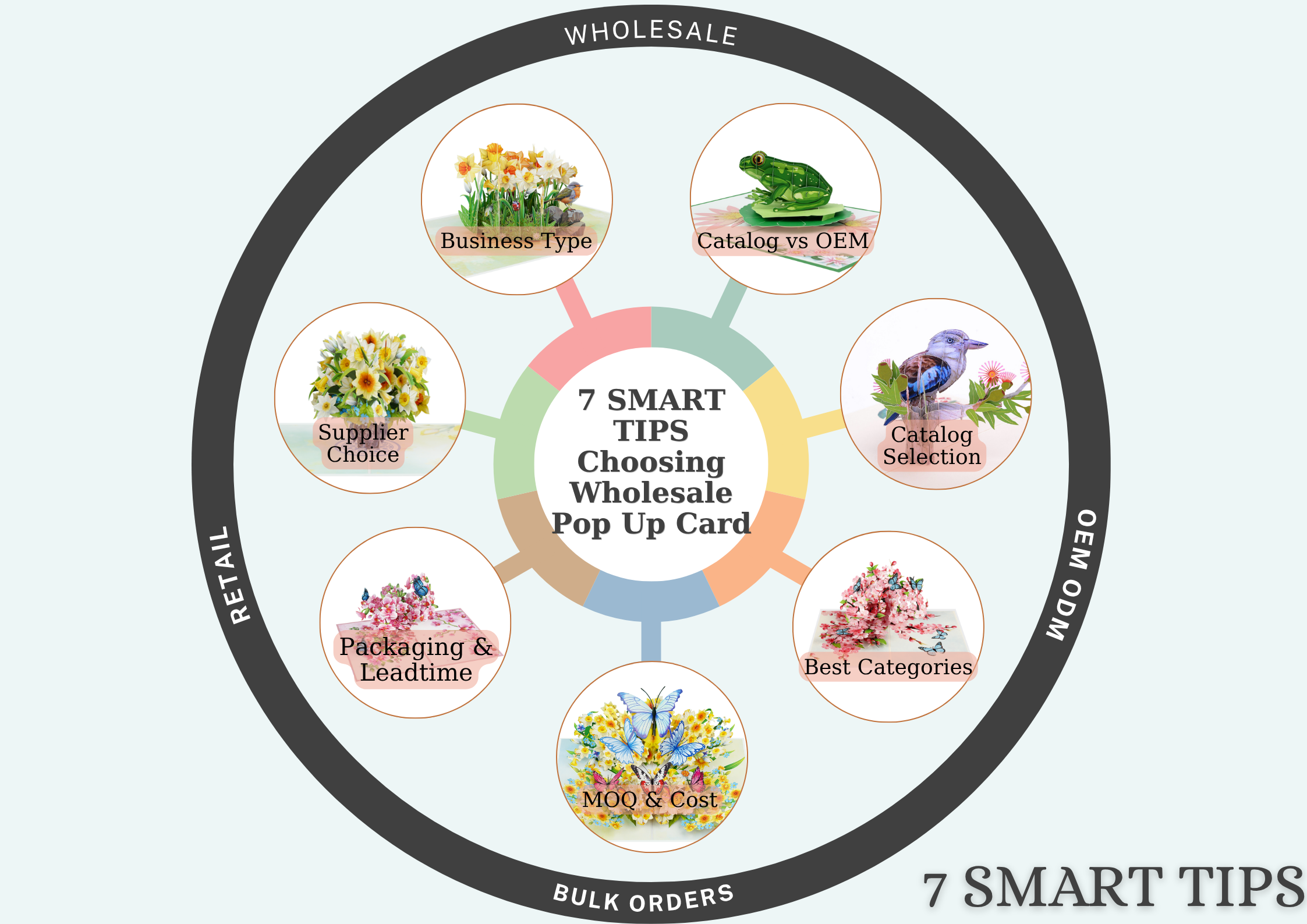
7 Smart Tips for Choosing Wholesale Pop Up Cards for Profitable Retail, OEM and Bulk Orders
For B2B buyers, choosing pop up cards is not simply about selecting beautiful designs. It is a commercial decision that affects retail performance, shelf appeal, profit margin, production planning, packaging, and long-term reorder potential.
A card may look impressive in a catalog, but the real question is whether it can sell well in your market. Retailers need designs that customers can understand quickly. Wholesalers need collections that can work across different store types. Corporate buyers need cards that feel professional and brand-appropriate. Private label brands need products that can support their positioning, packaging, and repeat sales strategy.
That is why buying wholesale pop up cards requires a different approach from buying ordinary greeting cards. B2B customers need to evaluate the occasion, design style, price range, MOQ, customization options, and supplier capability before making a decision.
This guide is written for retailers, gift shops, stationery brands, wholesalers, distributors, corporate buyers, and businesses looking for catalog pop up cards, OEM greeting cards, private label options, or light customization. It will help you understand how to choose the right products and how to work with a reliable pop up card manufacturer or pop up card supplier for your market.
Why pop up cards are valuable for B2B buyers
Pop up cards have a strong position in the greeting card and gifting market because they offer more than a printed message. When opened, they create a three-dimensional paper scene that feels more like a small gift than a standard card. This makes them especially attractive for retail display, seasonal campaigns, corporate gifting, and premium stationery collections.
For retailers, pop up cards can increase visual interest in-store. A flat greeting card usually depends on the cover design, while a pop up card creates surprise and interaction when customers open it. This physical experience helps the product stand out on shelves, counters, and gift displays.
For wholesalers and distributors, pop up cards can expand a greeting card collection with higher perceived value. They work well as both everyday products and seasonal items. Birthday, flower, thank you, wedding, and congratulations cards can sell throughout the year, while Christmas, Valentine’s Day, Mother’s Day, Father’s Day, Halloween, and Thanksgiving cards can support seasonal buying cycles.
For corporate buyers, pop up cards can be used for customer appreciation, event invitations, holiday greetings, employee recognition, partner gifts, and branded communication. A well-designed 3D card can make a business message feel more personal and memorable.
This is also why many B2B buyers look for a manufacturer that can support not only ready-made catalog designs but also custom pop up cards, OEM adjustments, and private label packaging.
Tip 1. Understand your business type before choosing designs
The best pop up card collection depends on who will buy the final product. A gift shop, a museum store, a corporate buyer, and a wholesale distributor should not choose products in exactly the same way.
Gift shops and boutiques usually need cards with broad emotional appeal. Birthday cards, flower bouquet cards, thank you cards, wedding cards, love cards, congratulations cards, and seasonal designs are often strong choices because they match common gifting occasions. For this type of buyer, the design should be easy to understand, visually attractive, and suitable for display near gifts, candles, flowers, books, or lifestyle products.
Bookstores and stationery shops may prefer artistic, thoughtful, and paper-focused designs. Their customers often appreciate writing, craft, and design details. Floral cards, blank note cards, nature themes, birthday cards, and elegant everyday cards can work well because they do not depend only on one holiday season.
Museum stores, tourism retailers, and destination shops often need designs connected to place, culture, architecture, or memory. A landmark pop up card can function as both a greeting card and a souvenir. For these buyers, catalog designs may be useful for general occasions, but custom or OEM development can become more important when they want a card that represents a specific museum, city, building, landscape, or cultural symbol.
Corporate buyers usually need products that feel polished, professional, and appropriate for business relationships. Thank you cards, appreciation cards, holiday cards, event invitation cards, and branded message cards are suitable options. For this group, OEM services are often valuable because they may need logo placement, brand colors, custom messages, or special packaging.
Wholesalers and distributors need the broadest strategy. They are not buying for one store only. They need products that can serve multiple retailers and customer segments. A strong wholesale collection should combine evergreen designs, seasonal designs, premium display pieces, and selected OEM or private label options.
Tip 2. Catalog designs, OEM orders, and custom pop up cards
Before placing an order, B2B buyers should understand the difference between catalog designs, OEM orders, and fully custom pop up cards. Each option serves a different purpose.
Catalog designs are existing products that the manufacturer has already developed. The structure, artwork, cutting files, and production method are usually ready. This makes catalog designs a practical starting point for buyers who want to test the market, build a mixed collection, reduce development time, and avoid the higher cost of a fully custom project.
OEM orders are suitable when a buyer wants to adjust an existing product or product concept to fit their brand. This may include changing the cover artwork, adding a logo, adjusting the message, changing packaging, applying a private label, or creating a branded collection based on available structures. For many retailers and distributors, OEM is the best middle option because it gives more brand control without requiring a completely new product from the beginning.
Fully custom pop up cards are developed from a new idea, story, artwork, and paper structure. This option is ideal for museums, landmarks, events, corporate campaigns, wineries, tourism brands, and exclusive retail collections. However, custom projects usually require more discussion, sampling, revisions, lead time, and production planning.
If your business is new to pop up cards, it is usually smarter to start with catalog designs or OEM adjustments first. After you understand which themes and price ranges sell well, you can invest in custom pop up cards with more confidence.
For a more detailed comparison of customization models, you can read OEM and ODM greeting cards.
Tip 3. How to choose pop up cards from a wholesale catalog
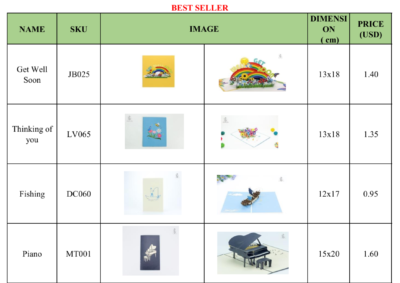
A wholesale catalog can include many attractive designs, but a smart buyer should not choose products based only on personal taste. The goal is to select cards that match the market, occasion, display environment, and target customer.
The first factor is occasion. Greeting cards are usually purchased for a specific moment, so occasion-based designs often have stronger commercial potential. Birthday, wedding, anniversary, thank you, congratulations, sympathy, get well soon, love, graduation, Mother’s Day, Father’s Day, Christmas, Valentine’s Day, Thanksgiving, and Easter are all important categories to consider.
The second factor is seasonality. Evergreen cards such as birthday, thank you, flowers, wedding, love, congratulations, and blank cards can sell throughout the year. Seasonal cards such as Christmas, Valentine’s Day, Halloween, Thanksgiving, Easter, Mother’s Day, and Father’s Day can generate strong sales during peak periods, but they require better timing and inventory planning. A balanced wholesale order should not depend only on seasonal products because unsold seasonal stock can become difficult to move after the holiday ends.
The third factor is customer profile. A premium boutique may prefer elegant floral cards and sophisticated color palettes. A children’s gift shop may need cute animals, bright colors, and playful birthday designs. A museum shop may need cultural or landmark-inspired cards. A corporate buyer may prefer clean, refined, and professional designs. The more clearly you understand your end customer, the easier it is to choose the right products.
The fourth factor is display impact. Pop up cards often perform best when customers can see the card opened. For retail, the design should look attractive from a short distance, stand well when displayed, and communicate its theme quickly. A design that looks good only in close-up photos may not always work well in a physical store. Strong retail designs usually have a clear subject, balanced colors, stable structure, and a strong “wow” moment when opened.
The fifth factor is price range. A good collection should include different levels of complexity. Not every product needs to be the most expensive or detailed card in the catalog. Retailers usually benefit from a mix of accessible everyday designs, reliable mid-range bestsellers, and premium pop up cards that create stronger display value.
For more ideas on retail-friendly designs, you can connect this section with best-selling greeting cards for gift shops and easy-to-sell greeting card designs in your cluster.
Tip 4. Best pop up card categories for wholesale and retail
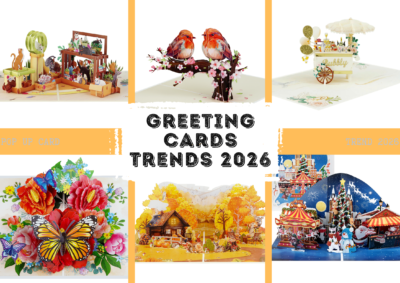
Some card categories are especially suitable for wholesale and retail because they are easy to understand, easy to display, and relevant to frequent buying occasions.
Birthday pop up cards are one of the safest categories for B2B buyers. Birthdays happen all year, and the theme works across many retail channels. A strong birthday collection can include cakes, balloons, flowers, animals, party scenes, age-specific designs, and general celebration messages.
Flower pop up cards are another powerful category because they are highly flexible. A floral card can be used for birthdays, thank you messages, Mother’s Day, get well soon wishes, sympathy, congratulations, or everyday gifting. Flower bouquet pop up cards are especially attractive because they can feel like a paper flower gift, not only a card.
Wedding, love, and anniversary cards are strong emotional categories. They are often purchased for meaningful relationships, so customers may be more willing to choose a premium design. Romantic flowers, hearts, couples, wedding cakes, champagne, and elegant celebration scenes can work well for this group.
Thank you and appreciation cards are useful for both retail and corporate buyers. They can be sold in gift shops and stationery stores, but they are also suitable for businesses, nonprofits, event organizers, schools, and client relationship programs. This category can lead naturally to OEM or branded card projects.
Holiday pop up cards are important for seasonal sales. Christmas is often the strongest greeting card season in many markets, but Valentine’s Day, Mother’s Day, Father’s Day, Halloween, Thanksgiving, Easter, and New Year can also create strong demand depending on the region. Buyers should plan holiday orders early enough to allow production, shipping, customs clearance, and retail display preparation.
Landmark and destination cards are ideal for museum stores, tourism shops, city gift shops, university stores, hotels, and cultural institutions. This category is also a natural entry point for custom projects because a buyer may want to represent a specific building, landscape, local icon, or visitor experience.
Corporate and branded cards can serve companies that want a more memorable way to communicate with customers, partners, employees, or event guests. These orders often involve OEM requirements, private label packaging, or custom messaging, which makes supplier capability especially important.
Tip 5. MOQ matters when buying bulk 3D pop up cards
MOQ is one of the first questions B2B buyers ask when sourcing bulk 3D pop up cards. It affects budget, product selection, customization options, and inventory risk.
In general, catalog designs usually offer more flexibility because the product has already been developed. OEM orders may require a higher MOQ when they involve new printing, cover changes, logo placement, branded packaging, or private label requirements. Fully custom pop up cards usually need more planning because the manufacturer must develop the structure, artwork, sample, and production setup.
This is why buyers should not ask only, “What is your MOQ?” A better question is, “What is the MOQ for catalog designs, OEM changes, private label packaging, and full custom development?” Each option may have a different requirement.
For new retailers, a smaller catalog order can be a practical way to test customer response. For wholesalers, a higher quantity may help improve unit cost and support wider distribution. For corporate buyers, MOQ should match the campaign quantity, event schedule, and branding requirements.
If you are comparing suppliers, make sure you understand the bulk 3D pop up cards MOQ before confirming artwork, packaging, and pricing.
Read more at MOQ for custom pop up cards.
What affects the cost of wholesale pop up cards
The cost of pop up cards is influenced by more than size and quantity. Two cards may look similar in a catalog but have very different production costs because of structure complexity, paper layers, assembly time, finishing details, and packaging.
A simple pop up card with fewer layers and standard printing will usually cost less than a highly detailed card with complex paper engineering, multiple hand-assembled parts, foil effects, special paper, or custom packaging. The cost can also change depending on whether the buyer chooses catalog designs, OEM adjustments, or fully custom development.
For B2B buyers, the goal should not be to find the lowest possible unit price at any cost. A cheaper card may create problems if the structure is weak, the paper does not stand well, the colors are inconsistent, or the packaging is not suitable for retail. In wholesale and retail, consistency matters because customers expect the product they buy to match the display sample and product images.
A professional pop up card supplier should be able to explain why one design costs more than another. The explanation should be based on production reality, not vague pricing. Buyers should ask about structure, paper quality, printing, assembly, packaging, MOQ, and customization before comparing quotes.
Read more at how much custom pop up cards cost.
Tip 6. Production process and lead time
Pop up cards are not ordinary printed cards. They require paper engineering, die-cutting or laser cutting, printing, folding, gluing, hand assembly, quality control, and packaging. Because of this, buyers need to understand the production process before planning a launch or seasonal order.
Catalog designs usually have shorter development time because the structure has already been tested. OEM orders need additional steps such as artwork adjustment, logo placement, packaging confirmation, and sample approval. Fully custom projects require more time because the design and structure must be created from the beginning.
Lead time also depends on order quantity, production season, material availability, and packaging requirements. During peak periods before major holidays, manufacturers may have tighter schedules, so buyers should avoid placing seasonal orders too late.
A reliable pop up card manufacturer should communicate timelines clearly, including sample time, approval time, production time, packaging time, and shipping preparation. This helps B2B buyers plan their sales calendar more accurately.
For a deeper look at how cards are made, link to production process of 3D pop up cards.
Packaging and private label options
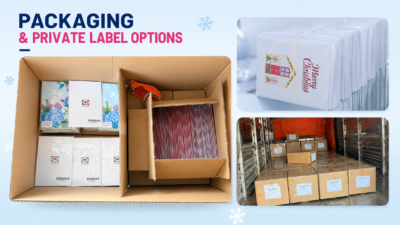
Packaging plays an important role in wholesale and retail sales. It protects the product, supports display, affects perceived value, and helps the buyer manage inventory.
For standard wholesale pop up cards, buyers should confirm whether each card includes an envelope, an insert note card, and individual OPP packaging. Retailers may also need barcode labels, SKU stickers, product names, or display-ready packaging. Corporate buyers may need branded sleeves, custom messages, logo stickers, or special presentation packaging.
For private label brands, packaging becomes even more important. A private label greeting cards supplier should be able to support brand consistency across the card, envelope, insert, packaging, and outer carton if needed. Even small packaging details can affect how premium the product feels in a store.
OEM packaging should be discussed early because it can affect MOQ, cost, sampling, and lead time. Buyers should not wait until mass production begins to confirm packaging details.
Tip 7. How to choose the right pop up card supplier
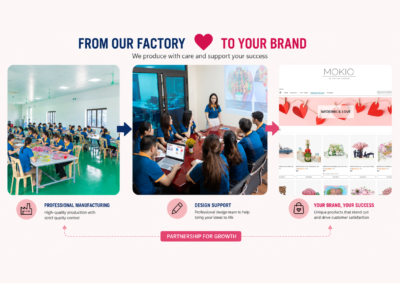
Choosing the right supplier is one of the most important decisions in B2B sourcing. A good supplier does not only sell products from a catalog. They help buyers choose suitable designs, understand MOQ, compare customization options, plan production, and avoid avoidable mistakes.
A professional pop up card supplier should have a strong product range, stable production capability, clear communication, and experience with export orders. For pop up cards specifically, the supplier should also understand paper engineering and hand assembly because these factors directly affect product quality.
Buyers should look for a supplier that can support both ready-made catalog designs and OEM development. This gives your business more flexibility. You may begin with catalog products, then move into private label packaging, branded covers, or exclusive designs after you understand your market better.
Quality control is another key factor. Pop up cards involve many manual steps, so the supplier should check cutting, folding, gluing, opening function, structure stability, printing quality, packaging, and final appearance. A beautiful sample is not enough. The supplier must be able to maintain consistency in bulk production.
Export experience is also important for international buyers. A manufacturer that regularly works with overseas customers will usually be more familiar with carton packing, documentation, shipping coordination, and communication across time zones.
This section should link to how to choose a reliable pop up card manufacturer.
Why buyers source from a custom pop up card manufacturer in Vietnam
Vietnam is an attractive sourcing destination for handmade paper products, greeting cards, and gift items because it combines skilled manual work, competitive production capacity, and export experience.
Pop up cards require careful hand assembly and attention to detail. A custom pop up card manufacturer Vietnam can be a strong option for buyers who need catalog products, OEM greeting cards, private label solutions, or custom pop up cards for specific campaigns.
For retailers and wholesalers, Vietnam can offer a good balance between craftsmanship and scalable production. For brands and corporate buyers, Vietnamese manufacturers can support more flexible OEM and custom development compared with suppliers that only offer standard printed cards.
A strong manufacturer in Vietnam should be able to provide product consultation, sampling, production, QC, packaging, and export support. This is especially useful for buyers who need a long-term partner rather than a one-time supplier.
This section can link to pop up card manufacturers in Vietnam.
A practical buying strategy for new B2B customers
For new B2B customers, the safest approach is not to start with the most complex custom project immediately. A better strategy is to begin with a focused catalog selection, test market response, and then expand into OEM or private label products.
A retailer may start with a balanced collection of birthday, flower, thank you, wedding, and seasonal cards. A wholesaler may need a wider mix that covers evergreen occasions and major holidays. A corporate buyer may begin with thank you cards or holiday cards before developing fully branded designs.
After the first sales cycle, buyers should review which products sold fastest, which designs received the most attention, which price range worked best, and which occasions created repeat demand. This sales data is more useful than guessing.
Once a buyer understands the market response, OEM becomes a smarter next step. For example, a retailer may turn bestselling flower cards into a private label collection. A museum shop may develop a custom landmark card. A corporate buyer may create branded appreciation cards based on a proven structure.
This approach reduces risk and helps buyers build a stronger product line over time.
Common mistakes B2B buyers should avoid
One common mistake is choosing designs only by personal preference. The buyer’s taste matters, but the final decision should be based on target customers, store type, occasion, price range, and display potential.
Another mistake is buying too many seasonal cards without a clear sales plan. Seasonal cards can perform very well, but they have a limited selling window. A balanced collection should include enough evergreen products to support year-round sales.
Some buyers also focus too much on unit price and ignore quality. This can lead to weak structures, poor display performance, inconsistent assembly, or packaging that does not meet retail expectations. In the long term, poor quality can damage the buyer’s brand more than a slightly higher unit cost.
Packaging is another area that buyers sometimes overlook. Envelopes, note cards, OPP bags, labels, barcodes, and private label details should be confirmed before production. These details can affect both customer experience and retail operations.
Finally, many buyers underestimate lead time. Pop up cards require more production steps than ordinary printed cards, especially for OEM and custom projects. Seasonal orders should be planned early to avoid pressure on production and shipping.
How Kiricard supports wholesale, retail, and OEM buyers
Kiricard works with B2B customers looking for catalog pop up cards, wholesale pop up cards, OEM greeting cards, private label packaging, and custom pop up card development.
For buyers who want to start quickly, Kiricard offers ready-made catalog designs across many occasions, including birthday, flowers, wedding, love, thank you, congratulations, Christmas, Halloween, Mother’s Day, Father’s Day, and other seasonal themes. These catalog designs are suitable for retailers, wholesalers, gift shops, stationery stores, and distributors that want to build a product range without starting from zero.
For buyers who need brand differentiation, Kiricard can support OEM options such as cover adjustment, logo placement, custom messages, packaging changes, and private label solutions. This makes Kiricard suitable for businesses looking for an OEM greeting card supplier for retailers or a private label greeting cards supplier with production experience.
For buyers with more specific ideas, Kiricard can also support custom pop up cards for campaigns, destinations, corporate gifts, events, and branded collections. With in-house design and production capability, Kiricard can help turn product concepts into manufacturable pop up card designs.
If you are looking for a pop up card manufacturer, pop up card supplier, or custom pop up card manufacturer Vietnam, Kiricard can help you evaluate suitable catalog designs, OEM options, MOQ, packaging, and production plans based on your market.
Final
Choosing pop up cards for wholesale, retail, and OEM orders should be a strategic sourcing decision. The best products are not only beautiful; they must also match the buyer’s market, customer profile, selling season, display environment, price range, and brand direction.
For new B2B buyers, catalog designs are often the most practical starting point. They allow you to test the market, understand customer preferences, and build a balanced collection with lower risk. Once you know which designs perform well, OEM and private label options can help create stronger differentiation and long-term brand value.
A reliable supplier should help you understand design selection, MOQ, cost, packaging, production process, and customization options clearly. With the right product mix and the right manufacturing partner, pop up cards can become a strong category for retailers, wholesalers, corporate buyers, and private label greeting card brands.




 Christmas
 Father’s Day
 Valentine’s Day
 Easter
 Thanksgiving
 Halloween
 Birthday
 Wedding
 Anniversary
 Graduation
 Baby Shower
 House Warming
 For Him
 For Her
 For Kids
 Floral
 Animals
 Trees
Trees Architecture
 Vehicle
 LGBTQ+
 Just Because
 Pop-up Box
 Pop-up Stand