Blog
6 Essential Steps to Order Custom Pop Up Cards for Your Brand

How to Order Custom Pop Up Cards for Your Brand: A Step-by-Step Guide
Custom pop up cards can turn a brand story, destination, event, product, or message into something customers can hold, open, and remember. Unlike standard printed cards, a 3D pop up card creates an interactive experience through paper engineering, illustration, structure, and hand assembly.
For businesses, custom pop up cards can be used in many ways. They can become premium corporate gifts, event invitations, museum souvenirs, product launch materials, holiday campaigns, customer appreciation cards, destination souvenirs, or branded retail products.
However, many buyers are unsure where to begin. Some have a clear visual concept but do not know whether it can be transformed into a pop up structure. Others know they want a distinctive card for their brand but have no experience with paper, 3D design, printing, or card production.
That is where a reliable custom pop up card manufacturer becomes important.
At Kiricard, the process begins with understanding your purpose, audience, idea, budget, and timeline. Even when customers do not yet have a finished concept, our team can help develop a direction that is visually strong, practical for paper engineering, and suitable for production.
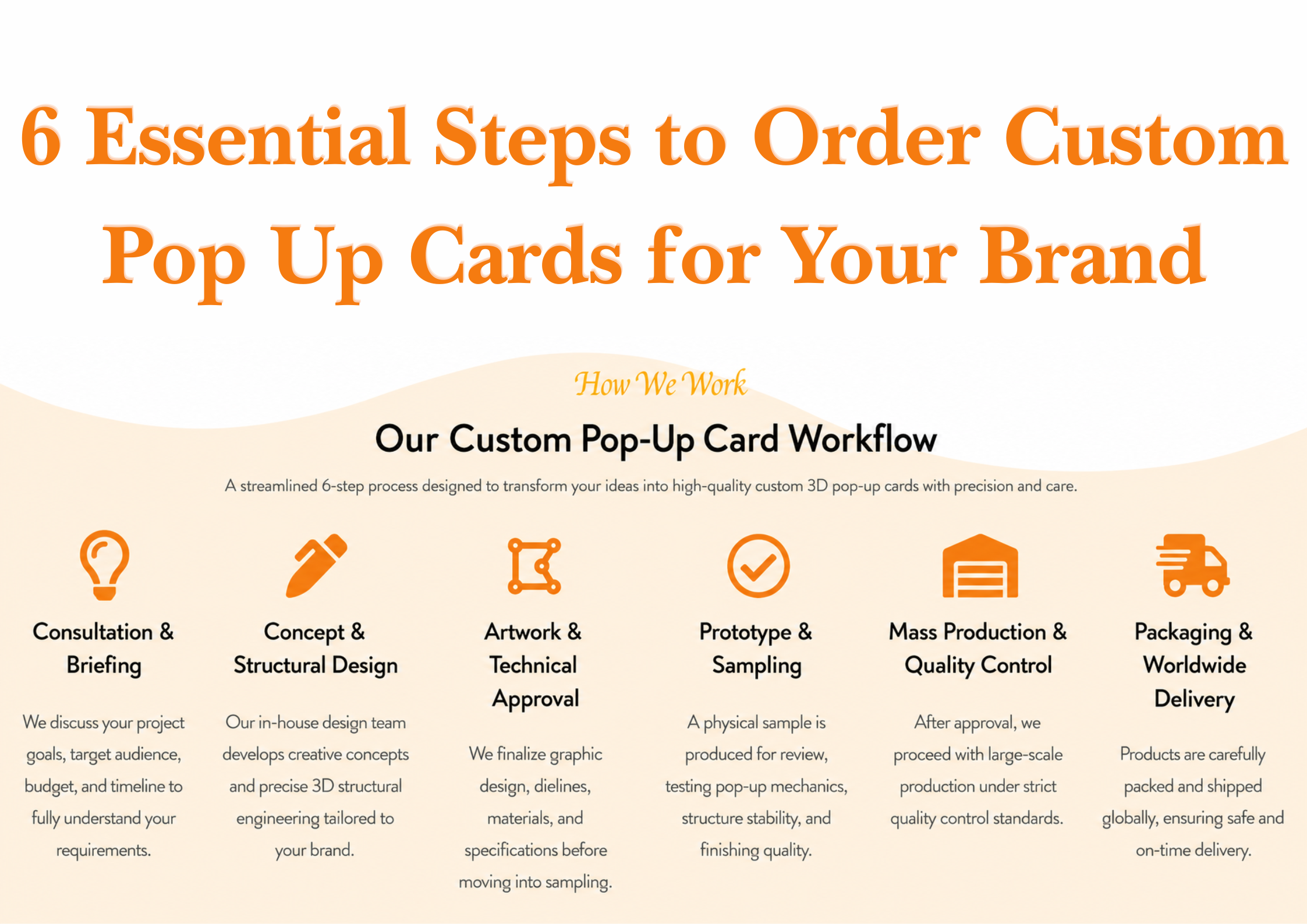
This guide explains how to order custom pop up cards for your brand through six essential steps.
Step 1: Share Your Project Goal and Initial Brief
Every successful custom pop up card project starts with a clear purpose.
Before discussing design details, it is important to define why you want to create the card and how it will be used. A custom card designed for a museum shop may need to tell the story of a landmark or cultural icon. A corporate card may need to communicate appreciation, celebrate a partnership, or support a product launch. An event invitation may need to create excitement before guests arrive.
At this stage, you do not need to have a finished drawing or technical file. A simple idea, reference image, product photo, event theme, brand guideline, or mood board is enough to begin.
Useful information to share includes your target audience, intended use, preferred card size, estimated quantity, desired launch date, target budget, brand colors, logo requirements, and packaging needs.
For example, a winery may want to create a card that brings its estate landscape and wine-tasting experience to life. A museum may want a card inspired by its building or an important exhibit. A company may want a premium holiday greeting card that includes its logo, brand colors, and a custom message.
If you do not yet have a clear idea, Kiricard can help guide the early concept stage. Our team can recommend suitable themes, structures, visual directions, and product formats based on your objectives. We also consider the practical side of paper engineering, so the final idea is not only attractive but realistic to produce.
This early consultation helps avoid a common mistake: creating a concept that looks good in a digital image but does not work well as a physical pop up card.
Step 2: Develop the Concept and Pop Up Structure
Once the project direction is clear, the next step is to turn the idea into a pop up card concept.
This is where visual storytelling and paper engineering come together. The design team explores how the key elements of your brand, product, destination, event, or message can appear when the card opens. Custom pop up cards rely on the same combination of illustration, structural planning, and moving paper mechanisms that make pop-up formats so distinctive, as seen in the art and engineering behind pop-up structures
A custom pop up card can feature a landmark, product, building, bouquet, vehicle, character, venue, logo, event scene, or branded object. The goal is not simply to place an image inside a card. The goal is to create a three-dimensional experience that feels surprising, meaningful, and easy to understand.
During this stage, Kiricard develops the main visual direction and considers the structural approach. Some designs work best with a central pop up element. Others may use layered scenes, fold-out structures, pull tabs, nested paper layers, or a combination of architectural and decorative elements.
The selected structure depends on several factors, including the level of detail required, the desired opening effect, the target price range, the card size, the paper material, and the production quantity.
For example, a landmark card may use layered architecture to create depth. A product launch card may use a central 3D product display. A corporate holiday card may feature a branded scene, a festive object, or a symbolic design that reflects the company’s message.
This step is particularly valuable for customers who have little experience with paper or pop up card design. Kiricard helps translate brand ideas into structures that are visually effective, stable when opened, practical for production, and appropriate for the intended market.
For brands looking at different customization models, see OEM and ODM greeting cards.
Step 3: Approve Artwork, Materials, and Technical Details
After the concept and structure are developed, the artwork moves into a more detailed approval stage.
This is where the visual direction becomes a production-ready design. The team finalizes the colors, graphic layout, text, logo placement, cover artwork, inner background, message area, paper elements, and structural details.
For branded projects, this is also the stage to confirm all identity elements. These may include logo usage, brand colors, campaign message, product name, QR code, website, barcode, copyright information, packaging design, and retail label requirements.
Technical details are equally important. The buyer and manufacturer should confirm card dimensions, paper type, printing method, finishing, envelope, insert card, OPP bag, sleeve, box, or private label packaging before sampling begins.
A clear technical approval process reduces the chance of expensive revisions later. It ensures that both sides agree on what will be produced and what the final product should look like.
For buyers planning larger or more detailed projects, it is useful to understand how price is affected by design complexity, materials, finishing, and packaging. Read how much custom pop up cards cost for a more detailed breakdown.
Step 4: Produce and Review the Physical Prototype
A digital mockup is useful, but a physical sample is essential for custom pop up cards.
The prototype stage allows the buyer to see how the structure opens, how the layers work together, how stable the card feels, how the colors appear in print, and whether the overall experience matches the original idea.
This is one of the most important stages in the entire project because pop up cards are physical products. The structure needs to open smoothly, stand properly, and create the intended visual impact.
During sampling, Kiricard reviews details such as cutting accuracy, fold lines, glue points, structural balance, paper thickness, opening movement, printed colors, and finishing quality.
The buyer may request adjustments after reviewing the prototype. These could include changing colors, reducing small details, improving a structural part, adjusting the cover, simplifying a section for better production, or changing the message area.
The purpose of sampling is not only to make the card look beautiful. It is also to make sure the design is stable, functional, and suitable for mass production.
For a closer look at how custom cards are developed and produced, visit our 3D pop up card production process.
Step 5: Confirm Quantity, MOQ, and Mass Production
Once the sample is approved, the project moves into mass production.
At this stage, the final production quantity, packaging requirements, shipping method, and delivery schedule should be confirmed. The manufacturing team then prepares materials, printing files, cutting tools, assembly plans, quality control standards, and packing instructions.
The minimum order quantity for custom pop up cards depends on the project. It can vary based on the complexity of the structure, the number of design versions, printing requirements, packaging customization, and whether new tooling or special materials are required.
A simple branded OEM card may have different MOQ requirements from a completely new landmark card or a detailed campaign design. Buyers should discuss the expected quantity early in the project so the design and production plan can be developed with realistic cost targets.
For more information, read MOQ for custom pop up cards.
During mass production, Kiricard manages printing, cutting, folding, hand assembly, quality control, and packaging. Because many pop up cards involve manual work, quality control is especially important. Each card must open correctly, maintain its structure, and meet the agreed visual standard.
This is why working with an experienced custom pop up card manufacturer Vietnam can make a major difference for international brands and retailers. The manufacturer needs not only printing capability, but also strong paper engineering knowledge, experienced hand assembly teams, and consistent quality control.
Step 6: Package, Ship, and Prepare for Launch
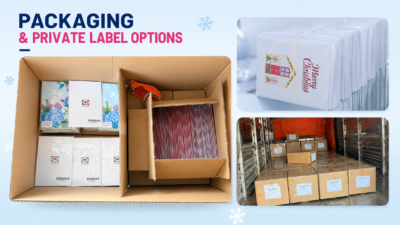
The final step is packaging and delivery.
Custom pop up cards can be packed in several ways depending on their intended use. Retail products may need envelopes, individual OPP bags, barcodes, SKU labels, branded sleeves, insert cards, display packaging, or custom boxes. Corporate projects may require presentation boxes, branded envelopes, event packs, or special delivery arrangements.
Packaging should protect the card while also supporting the customer experience. For retail products, the packaging should look clean, premium, and suitable for shelf display. For corporate gifts, packaging can help make the product feel more exclusive and aligned with the brand.
Kiricard supports worldwide shipping and can help customers plan the most suitable delivery method based on quantity, timeline, destination, and budget. Depending on the order, customers may choose express shipping, air freight, sea freight, or other export arrangements.
It is important to plan shipping early, especially for seasonal campaigns. Christmas, Valentine’s Day, Mother’s Day, museum exhibitions, product launches, and corporate events all have fixed dates. The production schedule should include enough time for sampling, approval, manufacturing, international shipping, customs clearance, and final retail or event preparation.
What If You Do Not Have an Idea Yet?
You do not need to be a pop up card expert to start a custom project.
Many Kiricard customers come to us with only a broad direction. They may have a product photo, a destination image, a logo, an event theme, a brand story, or a general wish to create something memorable. From there, our team helps identify the strongest visual direction and the most suitable pop up structure.
The consultation process can include recommendations on theme, card size, pop up mechanism, material choice, color direction, packaging, production quantity, and budget range.
For example, a customer may say they want a card that represents a vineyard, but they do not know whether to focus on the landscape, the wine bottle, the tasting table, or the estate building. Kiricard can help identify the visual element with the strongest storytelling value and develop it into a paper structure that feels distinctive and achievable.
The same approach applies to museum stores, tourism campaigns, corporate gifting, product launches, event invitations, and branded retail collections.
Custom Pop Up Card Ideas for Different Business Needs
Custom pop up cards can serve many business purposes beyond traditional greeting cards.
For corporate gifting, they can become premium thank-you cards, employee appreciation cards, holiday cards, partner gifts, or client welcome cards.
For events, they can be used as invitations, save-the-date cards, launch announcements, VIP gifts, or branded event keepsakes.
For museums and tourism retailers, they can transform buildings, landmarks, artifacts, landscapes, and cultural stories into collectible souvenir cards.
For product launches and PR campaigns, they can feature a new product, packaging, vehicle, destination, or campaign concept in an interactive format.
For retailers and private label brands, they can become exclusive collections that cannot be easily compared with standard greeting cards.
Kiricard can support both custom development and wholesale pop up cards for businesses that want to combine ready-made bestsellers with exclusive branded products.
Why Choose Kiricard for Custom Pop Up Cards?
Kiricard combines paper engineering, illustration, printing, hand assembly, and export production to support custom pop up card projects from concept to delivery.
Our team works with brands, retailers, museums, event organizers, corporate buyers, and distributors who need more than a standard printed card. We help transform ideas into paper experiences that are visually memorable, structurally practical, and suitable for real production.
As a pop up card manufacturer and pop up card supplier in Vietnam, Kiricard can support concept consultation, custom design, OEM options, prototype development, mass production, private label packaging, and worldwide delivery.
If you are still comparing suppliers, this guide on how to choose a reliable pop up card manufacturer can help you evaluate design capability, production quality, MOQ, communication, and export experience.
Start Your Custom Pop Up Card Project
Ordering custom pop up cards does not need to be complicated. The key is to start with a clear purpose, share your available references, and work with a manufacturer that understands both creative design and production reality.
Whether you already have a complete concept or only a simple idea, Kiricard can help you explore the right direction for your brand. From consultation and structure development to sampling, production, packaging, and global delivery, each step is designed to help create a card that customers will want to keep, share, and remember.
To begin, send us your project purpose, target quantity, preferred timeline, reference images, and any branding requirements. Our team will help you identify the most suitable custom pop up card solution for your business.




 Christmas
 Father’s Day
 Valentine’s Day
 Easter
 Thanksgiving
 Halloween
 Birthday
 Wedding
 Anniversary
 Graduation
 Baby Shower
 House Warming
 For Him
 For Her
 For Kids
 Floral
 Animals
 Trees
Trees Architecture
 Vehicle
 LGBTQ+
 Just Because
 Pop-up Box
 Pop-up Stand