Blog
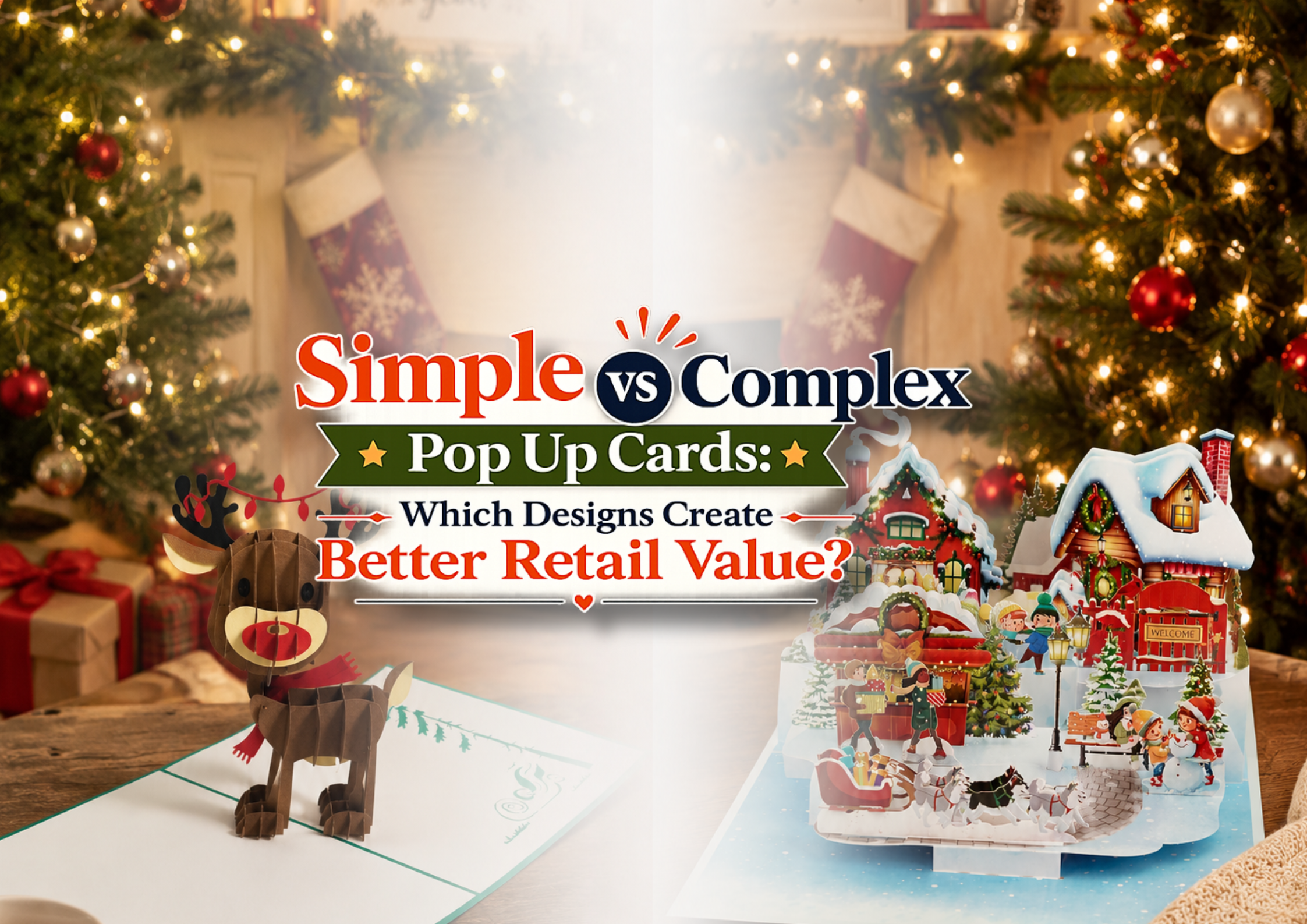
Simple vs Complex Pop Up Cards: Which Designs Create Better Retail Value?

Simple vs Complex Pop Up Cards: Which Designs Create Better Retail Value?
For retailers, choosing pop up cards is not only about deciding which designs look attractive in a catalog. It is also about choosing the right level of structure, detail, and perceived value for the store, customer profile, and target price range.
Some pop up cards are simple, with a clear focal point and a straightforward opening mechanism. Others are more detailed, using multiple paper layers, deeper scenes, smaller decorative elements, and more complex assembly. Both can be commercially successful. The right choice depends on how customers shop in your store and what role the cards are expected to play in your product range.
A simple card may be easier to understand, easier to stock across many occasions, and more suitable for quick gift purchases. A complex card may create stronger shelf impact, feel more gift-worthy, and support a higher retail price. Neither option is automatically better. The key is to understand how each type fits your retail strategy.
This guide explains the difference between simple and complex pop up cards, how complexity affects retail value, and how retailers can build a balanced collection for stronger sales.
What Makes a Pop Up Card Simple or Complex?
The difference between simple and complex pop up cards is not about whether they are made by hand or by machine. Most professional pop up cards involve a combination of machine-assisted printing and cutting, together with manual folding, gluing, assembly, and quality checking.
The real difference is the level of structural complexity.
A simple pop up card usually has one main pop up element, fewer paper components, a cleaner composition, and a straightforward opening effect. It may feature a birthday cake, flower, animal, heart, small Christmas tree, or another easy-to-recognize design. The card opens quickly, communicates its message clearly, and is often suited to broad everyday occasions.
A complex pop up card usually includes more layers, more depth, more intricate paper details, and a stronger sense of scene-building. It may recreate a landmark, a flower bouquet, a holiday village, a wedding scene, a wine estate, a vehicle, or a multi-part storytelling composition. These cards often require more careful assembly because the structure has more glue points, supporting elements, and visual layers.
For retailers, the important distinction is not which card is more technically impressive. It is which card creates the right value for the intended customer and price point.
Simple vs Complex Pop Up Cards: Key Differences for Retail
Simple pop up cards are often easier to position as accessible, everyday gifting products. They work well for birthdays, thank you messages, congratulations, small seasonal gifts, and impulse purchases near a checkout or greeting card display.
Complex pop up cards are usually more effective as premium products. Their structure can create a stronger “wow” moment when opened, making them suitable for more meaningful occasions, gift shops, museums, tourism stores, florists, boutique retailers, and corporate gifting programs.
The difference can be understood through several retail factors.
| Retail factor | Simple pop up cards | Complex pop up cards |
|---|---|---|
| Structure | Fewer layers and a clear focal point | Multiple layers, deeper scenes, more detailed elements |
| Customer impression | Easy, cheerful, accessible | Premium, collectible, gift-worthy |
| Shelf impact | Clean and quick to understand | Stronger visual surprise when displayed open |
| Retail price potential | More accessible price range | Higher perceived value and premium pricing potential |
| Assembly time | Usually faster | Usually more detailed and time-intensive |
| Best use | Everyday greeting cards and impulse gifting | Special occasions, souvenirs, premium gifts, hero displays |
| Custom potential | Suitable for cover, logo, or message changes | Strong for storytelling, landmarks, campaigns, and branded experiences |
For a retail buyer, this comparison is useful because it shifts the question away from “Which card is better?” and toward “Which card is right for this category in my store?”
When Simple Pop Up Cards Are the Better Retail Choice
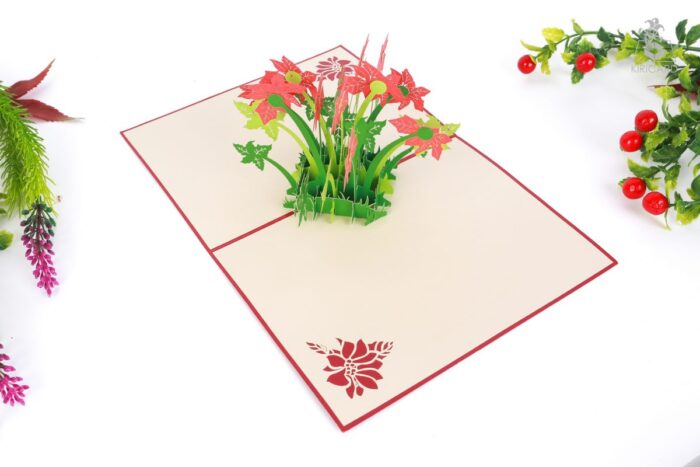
Poinsettia Flowers Patch Pop Up Card
Simple pop up cards can be the best choice when a retailer needs a broad, approachable, and easy-to-shop greeting card range.
A smaller structure can work especially well for standard occasions that customers purchase regularly. Birthday cards, thank you cards, congratulations cards, small floral designs, love cards, and basic holiday cards do not always need a highly detailed scene. In many cases, a clear design and a charming opening effect are enough to make the card feel more special than a flat greeting card.
Simple designs can also help retailers build wider assortments. Instead of investing heavily in a small number of premium cards, a buyer may choose more occasion-based SKUs across different themes. This can be useful for stores that need to cover many customer needs without making the display feel too expensive or too niche.
They are particularly suitable for retailers that focus on convenient gifting, everyday cards, quick purchases, or lower-to-mid retail price points. Stationery stores, bookstores, supermarket gift sections, lifestyle shops, and general gift retailers may all benefit from simple pop up card collections.
Simple cards also provide a practical entry point for new buyers. They can help a retailer test which categories sell best before expanding into more complex designs or custom pop up cards.
For buyers selecting their first assortment, the wholesale pop up cards guide can help identify suitable catalog categories, retail priorities, and OEM options.
When Complex Pop Up Cards Create Better Retail Value
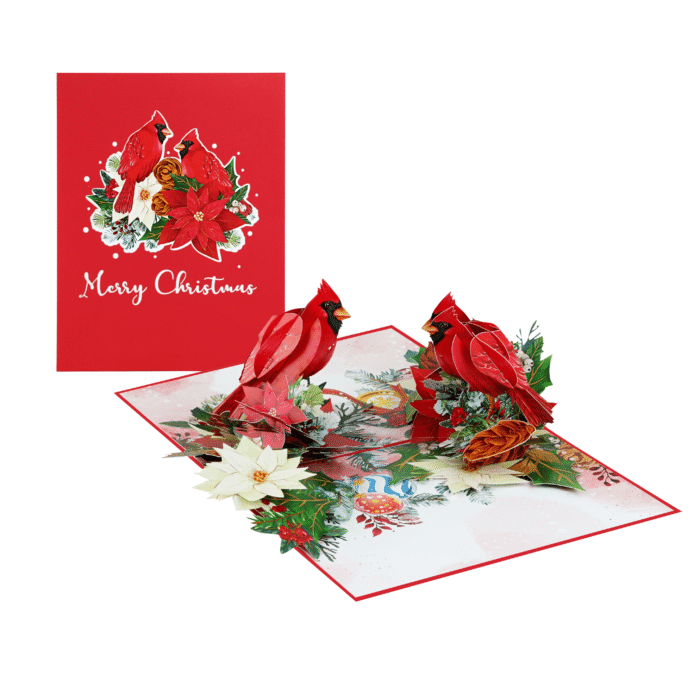
Cardinal Christmas Pop Up Card
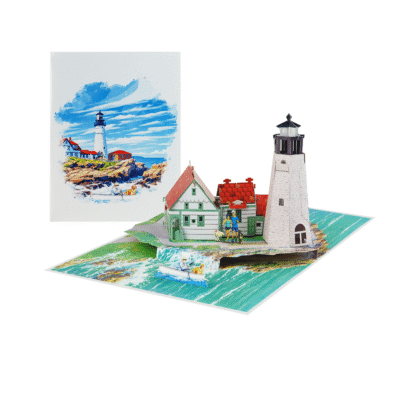
Custom Landmark Pop Up Card Oregon Coast Lighthouse design by Kiricard
Complex pop up cards are most effective when the product needs to feel like more than a greeting card.
A detailed pop up bouquet, landmark, holiday scene, wedding design, or architectural card can become part of the gift itself. Customers may buy it not only because they need a card, but because they want to give something memorable, collectible, or visually impressive.
This creates stronger perceived value.
In premium retail environments, complexity can help a product stand out. A customer browsing a museum store, boutique gift shop, tourism shop, florist, winery, or lifestyle store may be looking for something with more personality than a standard card. An open display sample with visible depth and detailed paper layers can immediately attract attention and encourage customers to pick it up.
Complex designs are also useful for storytelling. A landmark card can represent a city, building, or museum. A wine-themed card can reflect a vineyard experience. A Christmas card can become a miniature festive scene. A custom corporate card can communicate a brand message through a physical, interactive format.
For this reason, complex pop up cards are often strong choices for premium occasions such as weddings, anniversaries, milestone birthdays, holiday gifting, corporate appreciation, destination souvenirs, and branded campaigns.
The product may require a higher retail price, but the perceived value can also be significantly higher when the structure is well designed and displayed properly.
How Complexity Affects Cost, MOQ, and Lead Time
Card complexity affects more than visual appearance. It also affects how the card is produced.
A simple pop up card may use fewer paper pieces, fewer glue points, and less assembly time. This can make it easier to produce in larger quantities and may support a more accessible unit price.
A complex card may require more paper layers, more precise cutting, more detailed folding, longer assembly time, and more careful quality control. If the card has a large number of small elements or a delicate structure, packaging may also need more attention to ensure that the product remains protected during shipping and retail handling.
For custom projects, complexity can also influence MOQ and sampling requirements. A simple OEM design may only require a cover change, logo placement, or new message. A complex custom project may need a new structure, prototype development, design revisions, and a more detailed production setup.
This does not mean complex cards should be avoided. It simply means they should be chosen with the right commercial purpose in mind.
A premium landmark card, flower bouquet card, or corporate gift card may justify a higher cost because it supports a stronger retail price and creates a more distinctive customer experience. However, a simple birthday or thank you card may be the more profitable choice for a high-volume everyday category.
Buyers should always evaluate cost alongside retail positioning, expected sell-through, target margin, and display strategy.
For a detailed explanation of cost factors, find more information at how much custom pop up cards cost. For quantity planning, read more at MOQ for custom pop up cards. Buyers can also learn more about the production stages through production process of 3D pop up cards.
How Retailers Should Build a Balanced Pop Up Card Product Mix
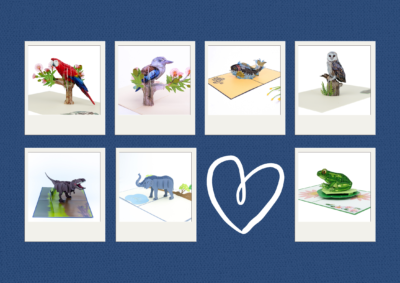
Animal greeting cards for gift shops
The strongest retail assortment usually includes a mix of simple and complex cards rather than relying entirely on one type.
Simple cards can provide the foundation. They cover everyday occasions, offer accessible prices, and help customers make quick buying decisions. Complex cards can act as premium highlights. They create visual interest, lift the overall presentation of the display, and give customers a more special option when they need a meaningful gift.
A useful starting framework for a new retailer may be to build the collection around three levels.
The first level includes simple evergreen designs such as birthdays, flowers, thank you cards, congratulations, and small love-themed cards. These are practical for regular year-round sales.
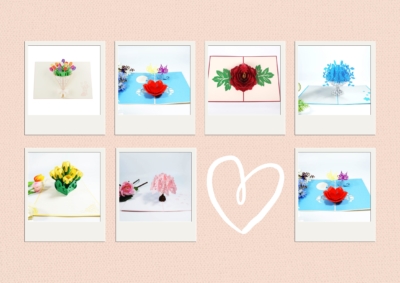
Simple flower designs
The second level includes moderately detailed cards such as larger floral designs, wedding cards, animal scenes, holiday cards, and more decorative celebration cards. These products can sit at a slightly higher price point while still working for broad retail demand.
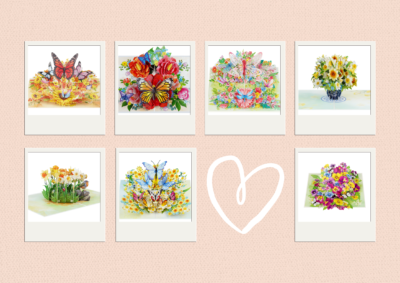
Complex flower designs
The third level includes complex premium cards. These may be landmark cards, large flower bouquets, Christmas scenes, museum cards, wine-themed designs, detailed wedding cards, or custom branded pieces. They may sell in lower volume than everyday cards, but they can create stronger visual impact and higher value per sale.
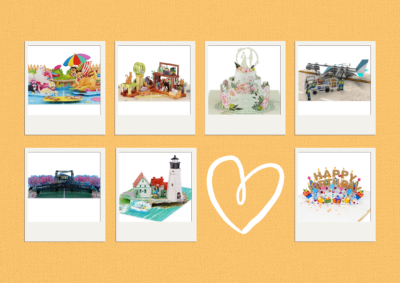
Complex premium cards
The exact mix should depend on the store. A museum store may carry a higher percentage of premium landmark and destination cards. A small stationery shop may focus more heavily on simple birthday and thank you designs. A boutique gift shop may benefit from a balanced mix of floral, wedding, holiday, and premium display cards.
The key is to treat complex cards as strategic products, not simply expensive ones. They can help define the identity of a retail collection and make the overall display feel more distinctive.
Which Retailers Benefit Most from Complex Pop Up Cards?
Complex pop up cards are especially effective for retailers selling emotion, experience, or story-driven products.
Boutique gift shops benefit because customers are often looking for products that feel thoughtful and different from mass-market items. Museum stores and tourism retailers can use complex cards to turn local architecture, landmarks, cultural symbols, and visitor memories into collectible products.
Florists and lifestyle stores can benefit from detailed flower bouquet cards because the product naturally complements other gift categories. Wineries, specialty food shops, and destination brands can use pop up cards to strengthen storytelling around place, atmosphere, and product experience.
Corporate gifting businesses may also benefit from more complex cards because the product can become part of a larger relationship-building strategy. A branded 3D card can make a client thank-you message, holiday campaign, event invitation, or employee gift feel more personal and memorable.
Premium online gift brands should also consider complex designs because they tend to perform well in product photography and social media content. A card that looks impressive when opened can help create more engaging visual marketing.
How Display Strategy Changes the Value of Complex Cards
Complex cards often need to be displayed open to show their full value. Retailers can apply visual merchandising principles for retail displays to create focal points, improve product discovery, and help customers immediately understand the value of a detailed pop up design.
A customer cannot fully understand a multi-layered landmark, bouquet, or holiday scene by looking only at the cover. An open display sample helps communicate the product’s depth, craftsmanship, and surprise factor immediately.
Retailers should consider placing one or two open samples near the collection, while keeping the sellable stock protected in individual packaging. This gives customers the opportunity to see the effect without damaging the products intended for sale.
Complex cards can also work well as focal points in seasonal displays. For example, a premium Christmas scene can anchor a holiday gift section. A large flower bouquet card can sit beside real flowers, candles, or Mother’s Day gifts. A landmark card can become a hero item in a museum or tourism store.
Simple cards can then support the display by offering smaller, easier-to-buy options around the premium pieces.
For more practical merchandising guidance, link to how to display pop up cards in retail stores to increase sales.
Choosing the Right Pop Up Card Manufacturer for Your Product Strategy
A reliable pop up card manufacturer should help retailers choose the right complexity level for their product strategy. The best supplier does not simply recommend the most detailed design or the lowest-cost option. They should help the buyer understand what is realistic for the budget, quantity, packaging, timeline, and intended retail price.
For simple catalog orders, the manufacturer should be able to recommend proven designs that are suitable for broad retail demand. For OEM projects, they should explain which changes are practical, such as updating covers, messages, branding, or packaging.
For complex custom pop up cards, the manufacturer should provide guidance on paper engineering, prototype development, structural stability, assembly time, quality control, and lead time. This is particularly important for museum projects, destination cards, corporate gifts, product launches, and retail collections that need to feel exclusive.
Retailers should look for a supplier with experience in both catalog products and custom development. That flexibility makes it easier to start with ready-made designs, test market demand, and develop more distinctive products when the business is ready.
For supplier evaluation, link to how to choose a reliable pop up card manufacturer. For custom project planning, link to how to order custom pop up cards for your brand.
Final Thoughts
Simple and complex pop up cards serve different purposes in retail.
Simple designs are useful for everyday occasions, accessible price points, wider assortments, and quick gift purchases. Complex designs are more suitable for premium gifting, storytelling, display-led retail, souvenirs, special occasions, and branded experiences.
The best retail collection often combines both. Simple cards provide dependable volume, while complex cards create visual distinction and stronger perceived value.
For retailers, the most important decision is not whether a card is simple or complex. It is whether the product fits the store’s customers, price strategy, display environment, and wider product mix. With the right balance, pop up cards can become a high-value category that supports both everyday sales and memorable gift purchases.




 Christmas
 Father’s Day
 Valentine’s Day
 Easter
 Thanksgiving
 Halloween
 Birthday
 Wedding
 Anniversary
 Graduation
 Baby Shower
 House Warming
 For Him
 For Her
 For Kids
 Floral
 Animals
 Trees
Trees Architecture
 Vehicle
 LGBTQ+
 Just Because
 Pop-up Box
 Pop-up Stand